

Finding water around your water heater can be alarming, but the first step is not deciding whether the unit needs to be replaced. The immediate priority is determining whether water is actively escaping and preventing additional damage.
Water around a water heater can come from the unit itself, connected plumbing or another nearby source. The cause needs to be identified before the correct repair can be determined.
Do Not Ignore Water Around the Tank
A small amount of moisture may seem minor, but persistent water around a water heater should be investigated.
Look at where the water appears to be coming from without dismantling components.
Check whether it appears near a pipe connection, valve, the upper portion of the unit or underneath the tank.
The visible location can provide a clue, although water can run along pipes and surfaces before reaching the floor.
Protect the Area
Move belongings away from the water where practical and prevent water from spreading into nearby finished areas.
If water is actively flowing and you cannot safely control it, professional assistance may be appropriate.
Water heaters can involve water, electricity or gas depending on the system. Avoid attempting repairs involving electrical or gas components unless you are appropriately qualified.
Is the Water Heater Itself Leaking?
Not necessarily.
Water near a heater can originate from connected plumbing, fittings, valves, condensation or the water heater.
This is why seeing water on the floor does not automatically mean the entire unit needs replacement.
The actual source needs to be identified first.
What If the Tank Is Leaking?
A leak originating from the tank itself is different from a replaceable fitting or external plumbing connection.
The condition and source of the leak will determine whether repair is possible or whether replacement of the water heater should be considered.
Avoid assuming that adding sealant or attempting to patch the exterior of the tank is a suitable repair.
Watch How Quickly the Water Is Accumulating
A few drops and rapidly spreading water are very different situations.
If water is accumulating quickly, entering walls or flooring, or cannot be contained, the situation becomes more urgent.
If the leak is minor and contained, it still deserves investigation, but there may be more time to assess the cause.
Don’t Confuse Immediate Action With Diagnosis
This article is about what to do when you first discover the leak.
Determining why the water heater is leaking is a separate diagnostic question involving the source, age, condition and components of the system.
For an active leak, focus first on protecting the home and getting the source properly assessed.
Could a Water Heater Leak Cause a Backup Elsewhere?
Usually, a water heater leak and a drainage backup are separate problems.
If water is instead coming up through a floor drain or another fixture, read why water may be backing up into your home.
When to Call a Plumber
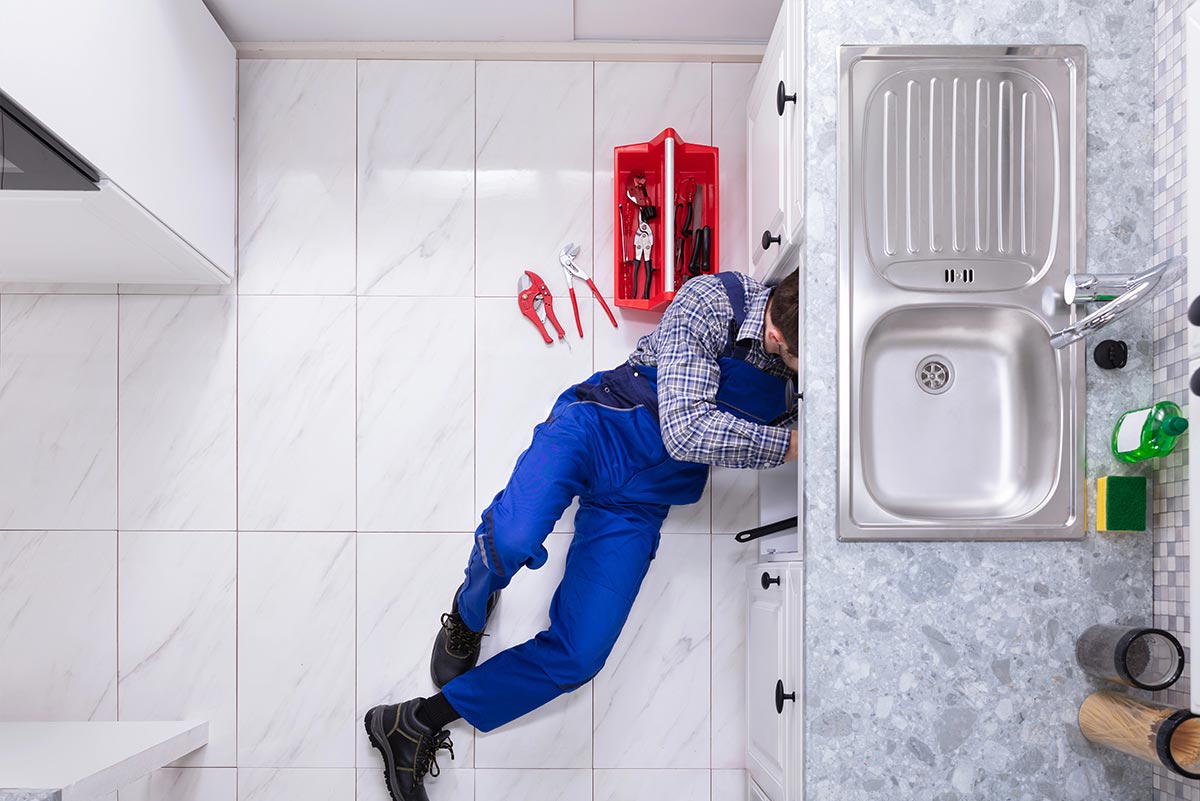
Call for assistance if you cannot identify or control the leak, water is spreading into the building, the tank itself appears to be leaking or the situation involves components you should not handle yourself.
Stillwater Plumbing & Heating provides emergency plumbing help in Kamloops for urgent plumbing problems.
Call (250) 819-8247 for assistance in Kamloops.
FAQs
Not automatically. The water may be coming from connected plumbing or another component. The source needs to be identified first.
It can. The severity depends on the source and condition of the system, which is why an active leak should not be ignored.
An exterior patch should not be assumed to be a suitable repair for a failed pressurized water-heater tank.
It can be if water is escaping rapidly, cannot be contained or is causing property damage. A small contained leak is different but still requires investigation.
Avoid repairs involving gas or electrical components unless you are appropriately qualified.
When Should You Call a Plumber?
One thought on “What to Do If Your Water Heater Is Leaking”